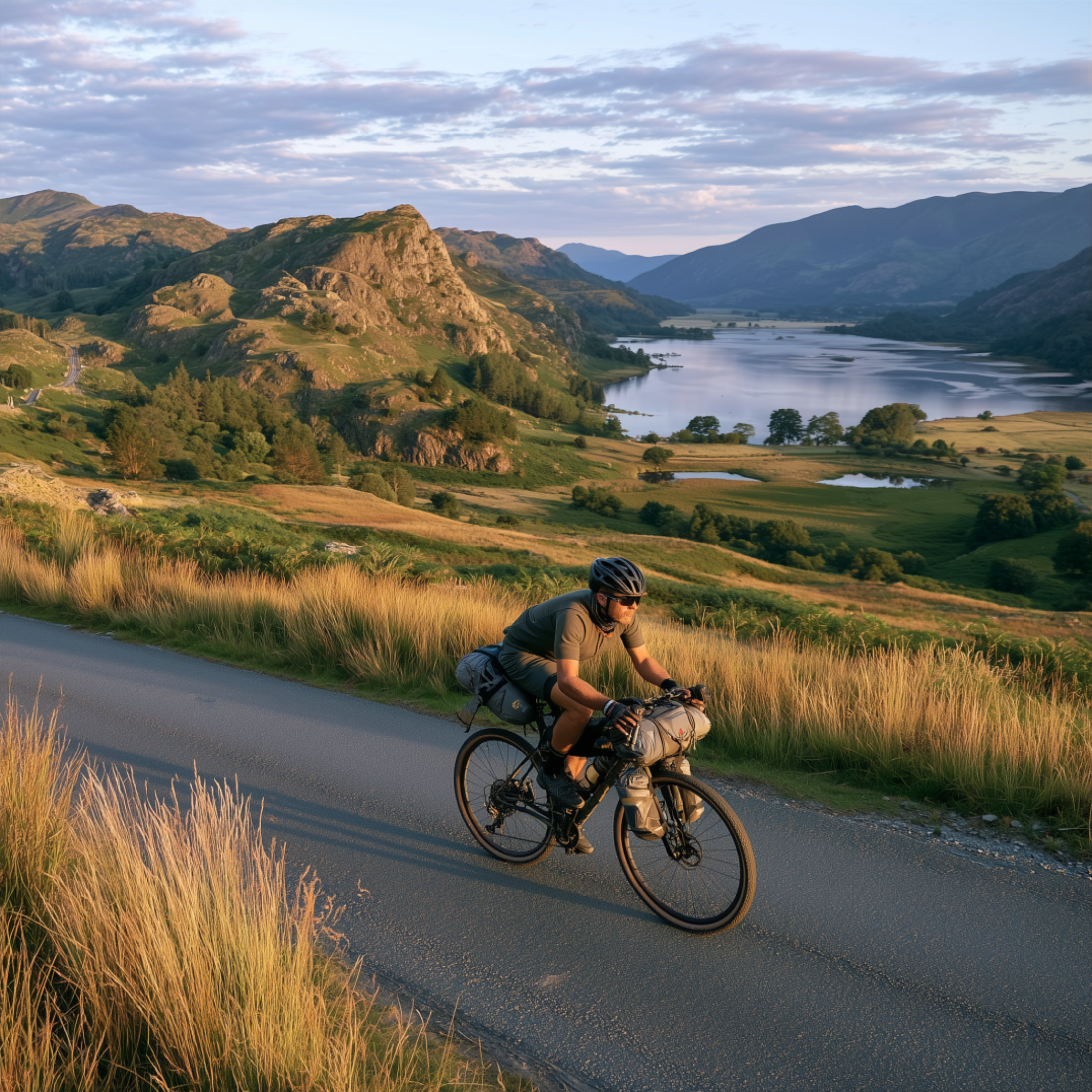
Just set off, leave the tarmac behind and discover the world on secluded country lanes – cycling holidays are currently enjoying a renaissance. At the heart of it all is the gravel bike. As the perfect hybrid between a fast road bike and a sturdy mountain bike, it combines the best of both worlds.
The gravel bike offers the speed you need for long stretches of flat terrain, whilst also providing the off-road capability required for paths through fields, woods and meadows. If you’re looking for freedom on two wheels, the gravel bike is the ideal companion for your next big cycling adventure. However, to ensure your time in the saddle doesn’t end in frustration, there are a few key points to bear in mind when buying a bike and planning your route.
The perfect touring bike: what to look for when buying one
Anyone wishing to go on multi-day tours on a gravel bike has different requirements for their equipment than a casual cyclist. The most important criterion for luggage carriers is the number of mounting points. A good touring gravel bike has eyelets on the frame, fork and, ideally, on the top tube as well. These allow you to securely bolt on luggage racks, bikepacking bags, mudguards and multiple bottle cages. This keeps your luggage stable and close to the bike’s centre of gravity, which noticeably improves handling.
Frame geometry and ergonomics play a key role in long-distance comfort. Compared to a classic road bike, the riding position on a gravel bike is significantly more upright. This noticeably relieves strain on the lower back, the neck and also the wrists. Typical gravel handlebars feature what is known as a «flare» – the underside of the handlebar bend flares outwards. This provides greater leverage on technical terrain, offers space on the lower part of the handlebars for a wide handlebar bag, and means that when riding in the lower-bar position, your upper body isn’t forced quite as far forward as it would be on a classic road bike handlebar without flare. As you spend many hours in the saddle every day, saddle discomfort can spoil the fun. Before buying, be sure to invest time in a professional sit bone analysis at a specialist shop. Only a saddle that fits your pelvis can effectively prevent painful pressure points on long rides.
Another important factor is the gear ratio. When cycling uphill with luggage, every low gear counts. Make sure you have a gear ratio of less than 1:1 (for example, a small front chainring with 40 teeth and the largest rear sprocket with at least 45, or better still 50, teeth). In addition, wide, knobbly tyres (40 mm and above) provide the necessary comfort and grip on loose ground, whilst hydraulic disc brakes ensure the loaded bike can be brought to a safe stop even in wet conditions. Don’t forget: a puncture repair kit with a spare inner tube for any tyre repairs and a multi-tool containing the essential tools should also be packed.
Reach your destination safely: Smart digital route planning
The gravel bike’s greatest strength – its versatility – is also its greatest challenge when it comes to route planning. Road cycling routes often take you along busy main roads, whilst dedicated mountain bike trails are impassable with heavy luggage. Make use of specialised planning tools such as SwitzerlandMobile, Ride with GPS, Komoot or Strava. These platforms allow you to set your sports profile specifically to «gravel bike». This ensures that paved forest tracks and cycle paths are selected as a priority.
If in doubt, plan your daily distances conservatively. Cycling on unpaved surfaces and up hills takes significantly more effort and time than flat stretches on smooth tarmac, especially with extra luggage and in hot weather or against a headwind. Anyone who normally covers 100 kilometres a day should, when cycling off-road, aim for 50 to 80 kilometres, depending on the terrain and weather conditions. It’s also important to regularly check the facilities along the route: where can I top up my water and buy provisions? Are there bike repair shops in case of an emergency? If you sort out these details in advance, you’ll turn your cycling holiday into an unforgettable and stress-free adventure in the heart of nature. One final tip: whilst a flashing light is not compulsory even during the day, it significantly improves your visibility and therefore your safety as a cyclist.
30 June 2026