
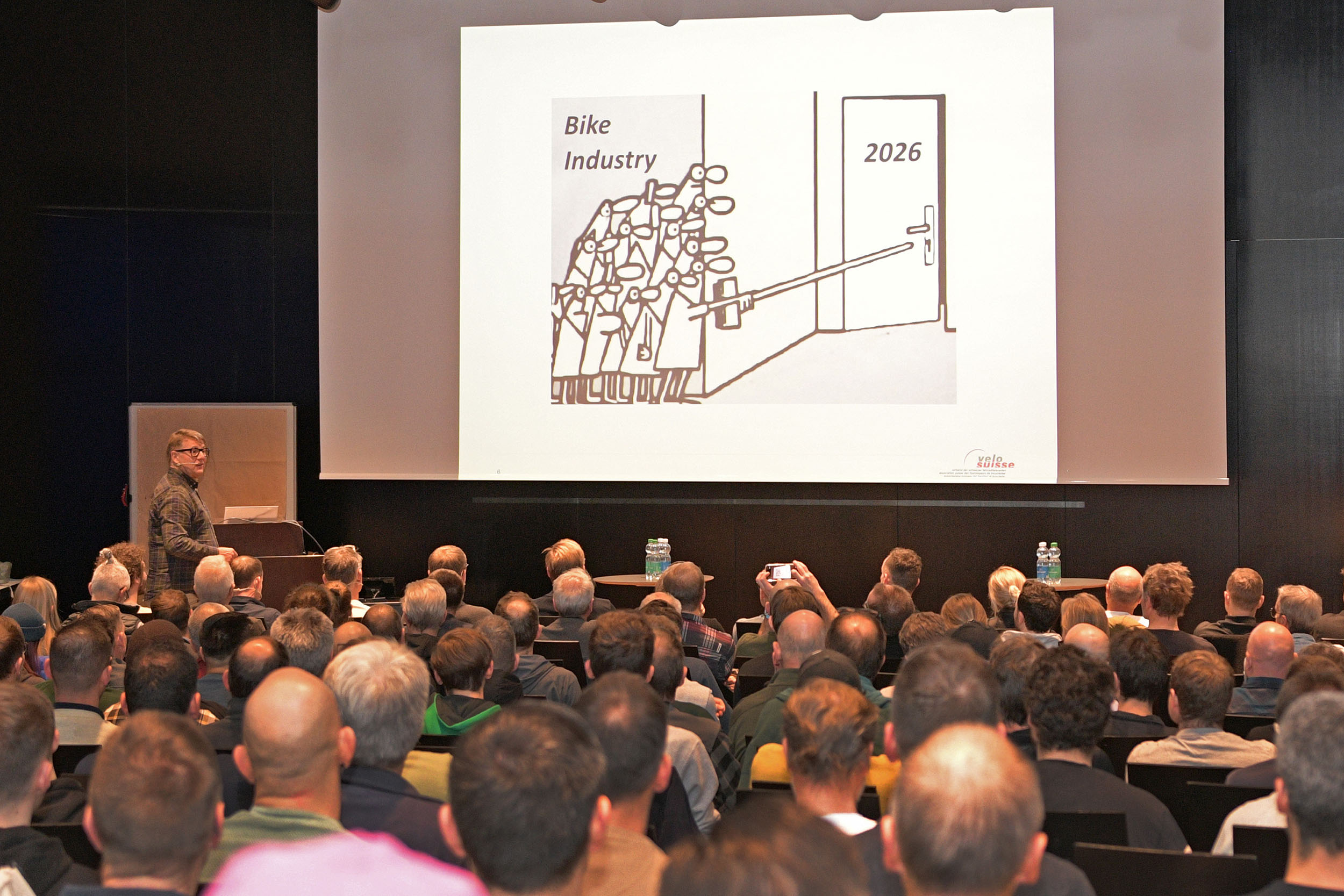
«Confidently into the future of cycling»: The motto of this year's InfoTech was reflected in the pleasing attendance, which was well above the previous year's level, and the positive general mood. 758 tickets were sold for the two-day specialist bicycle trade training event at the Seminarhotel Sempachersee in Nottwil. What is particularly pleasing is that the event on 19 and 20 January saw a significant rejuvenation. 130 trainees attended the 250 seminars and three forums on technology, business management, sales training, employee and company management to bring their knowledge up to date.
The 23rd InfoTech began on Monday morning with the first highlight. The welcome address, which was also the first of three forums, brought to light parallels that give cyclists in Switzerland hope for better times. The new Velosuisse President Nathalie Schneitter and 2-Rad-Schweiz President Robert Weishaupt spoke. They agreed on many points. For example, the cycling industry must assert its influence even more clearly in federal government. And that by joining forces, the chances of achieving political goals would increase significantly.
Skilled labour shortage as a challenge
The second forum after lunch was dedicated to the topic of the shortage of skilled labour and how it can be counteracted with attractive employment conditions and good training. In his input presentation, Laurens van Rooijen, editor of the specialist magazine Cyclinfo, referred to a study conducted by component market leader Shimano on the labour situation in European bicycle workshops. The study comes to a clear conclusion: if customers have to wait too long for bike repairs, they either help themselves - or they drop out. One reason for long waiting times is understaffing in garages. The specialist firm Dynamot found that around a third of Swiss bike dealers are desperately looking for staff at the start of the season. What's more, around a third of those leaving the industry change jobs, which further exacerbates the shortage of skilled labour. This costs turnover.
The reigning Swiss bicycle mechanic champion Lorin Engeli from Randen Bike in Beringen, 2-Rad-Schweiz vocational training chairman Roland Fischer and apprentice trainer Marius Graber from Velociped in Kriens then spoke about the importance of vocational training.
Supply and demand in a free market economy
The large evening forum in turn focussed on the changes in the value chain since 2015. In his input presentation, Velosuisse Vice President Christian Bättig from Chris Sports explained how the market has changed over the last ten years. „Omnichannel“ is the magic formula in the sales structure of the free, globalised market economy. (Almost) everyone now buys and sells via multiple channels - including online. This upsets the price structure and the flow of goods is difficult to control - especially in a market that, like the bicycle market recently, was under strong pressure from overstocking. This puts pressure on prices at all trade levels. The result is margin erosion and the migration of part of the revenue to online retail.
This can become a problem for service-oriented stationary specialist retailers, but also for service-oriented suppliers, as became clear in the subsequent panel discussion, moderated by Christian Rocha, with specialist retailer and Primebike Group President Urs Vogelsanger, Veloplus Managing Director Dominique Metz and Reto Meyer, Co-CEO of bicycle manufacturer Tour de Suisse-Rad. Interestingly, the manufacturers' recommended retail prices are particularly counterproductive. This is because they are usually used as a reference for advertised price reductions.
Caption:
Velosuisse Vice President Christian Bättig with a twinkle in his eye during his evening input presentation on market changes since 2015. Photo Velosuisse/Corina Venzin
Nottwil, 20 January 2026